 Reviews

 Proudly American

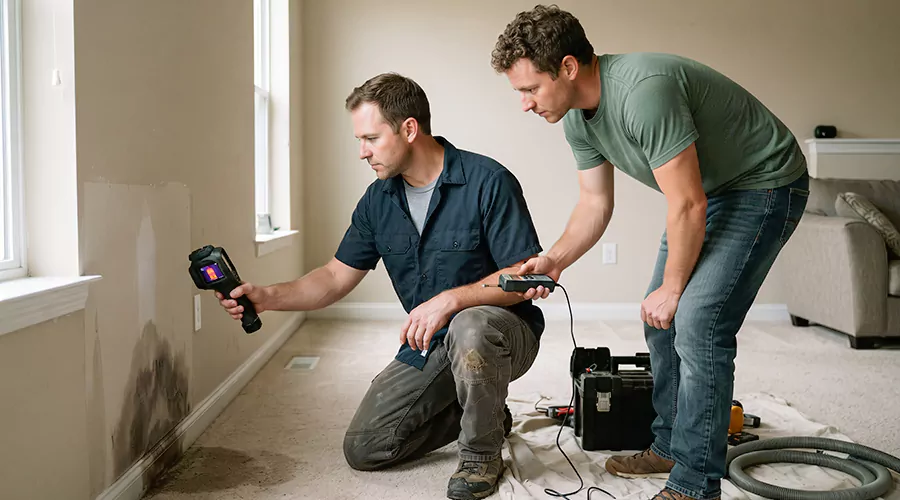
Hidden water damage often appears as musty odors or recurring stains before you ever see standing water. Other warning signs include peeling paint or warped flooring. Swollen baseboards and unexplained water use can also point to moisture behind walls or beneath floors, making water damage detection important for identifying hidden moisture early.
The EPA advises drying wet materials within 24 to 48 hours when possible because prolonged moisture supports mold growth. Hidden leaks can therefore become more expensive when early warning signs are ignored.
Where Does Hidden Water Damage Usually Occur?
Hidden moisture commonly develops where plumbing or exterior water can reach enclosed building materials. Common locations include wall cavities or ceilings below bathrooms. Areas around appliances and basement finishes are also at risk because moisture can remain there without producing an obvious puddle.
Check areas around:
- Toilets and tubs
- Dishwashers and refrigerators
- Washing machines
- Water heaters
- Under-sink cabinets
- Basement walls
- Windows and exterior doors
- Ceilings below bathrooms
A slow pipe leak can soak drywall from the back while the painted surface remains almost unchanged. That delay is why a water leak restoration problem can begin long before visible damage appears.
What Are the Main Signs of Hidden Water Damage?
The clearest warning signs are changes in smell or color that keep returning after normal cleaning. Changes in texture or shape can also reveal concealed moisture. One mark does not always prove a leak. Several signs in the same area deserve closer attention.
- Persistent musty smell. An earthy odor that returns after ventilation can point to damp material.
- Brown or yellow stains. Expanding ceiling or wall marks can indicate water movement.
- Bubbling paint. Moisture behind paint can weaken adhesion.
- Soft drywall. Spongy wallboard can indicate absorbed water.
- Warped flooring. Wood may cup while laminate can swell at seams.
- Swollen baseboards. Trim can expand after repeated moisture exposure.
- Recurring mold. Mold that returns suggests the moisture source remains.
- Unexplained water use. A moving meter with fixtures off can indicate a leak.
- Dripping sounds. Water sounds inside a quiet wall can point to an active problem.
- Cool wall areas. Localized cool spots can appear where moisture is evaporating.
Current 2026 guidance on hidden moisture highlights recurring odor and warped flooring as common clues. Paint changes and unexplained water use can provide further warning.
How Does Hidden Water Damage Progress?
Hidden moisture can move from a small cosmetic issue to material damage when the source continues. Water can wick through drywall or migrate beneath flooring. The repair scope then grows because more building layers must be dried or removed before finishes can be restored.
| Stage | What You May Notice | Likely Result |
|---|---|---|
| Early | Faint odor or small stain | Source may be localized |
| Developing | Peeling paint or damp trim | Drywall may be wet |
| Advanced | Warped floors or soft walls | Multiple materials affected |
| Severe | Mold or deterioration | Larger repair scope |
The EPA notes that mold can grow on wet indoor materials when moisture remains available. Fast water damage mitigation can therefore reduce the chance that a small concealed leak becomes a larger problem.
Can You Check for a Hidden Leak Yourself?
A simple water-meter test can help identify a plumbing leak without opening walls. Turn off all faucets first. Stop water-using appliances as well. Record the meter reading and wait 15 to 30 minutes without using water. Movement during that period can suggest water is escaping somewhere. You can also use a basic moisture meter on suspicious drywall or wood. Compare the reading with a similar dry area instead of relying on one number. Do not cut into a wall simply to investigate moisture if wiring or plumbing may be behind it.
What Happens if Hidden Water Damage Is Ignored?
Ignoring concealed moisture can allow stains to spread while flooring or wall materials lose their shape. Mold can also grow where wet surfaces remain damp. Repair becomes more involved once moisture reaches insulation or subflooring. Connected rooms can eventually become affected too.
Possible consequences include:
- Soft drywall
- Swollen flooring
- Damaged insulation
- Persistent odors
- Mold growth
- Stains that return after repainting
A delayed water damage repair project may require removal of materials that could have been dried earlier. Repainting without correcting the leak hides the symptom rather than stopping the damage.
When Should You Call a Professional?
Professional assessment is appropriate when moisture seems to be inside walls or beneath flooring. It is also useful when several rooms show symptoms. An unidentified source is another reason for deeper inspection because specialized moisture instruments can map the affected area without opening every finished surface.
Consider professional evaluation when:
- The water meter suggests an unexplained leak.
- A ceiling stain keeps growing.
- Flooring has started buckling.
- Drywall feels soft.
- Several rooms smell musty.
- Mold keeps returning.
- Water reached electrical components.
- Moisture remains after household drying.
Emergency water damage needs faster attention when an active leak continues to release water. A larger water damage removal project may be needed when moisture has spread beneath flooring or into wall cavities.
How Can You Prevent Hidden Water Damage?
Prevention works best when plumbing and moisture-prone areas are checked before symptoms become obvious. Monthly visual checks take only a few minutes. Leak alarms can also provide early warning near appliances or water heaters before water travels into finished materials.
Use this routine:
- Check under sinks each month.
- Inspect appliance hoses several times a year.
- Look around toilets for loose flooring.
- Test the sump pump before storm season.
- Watch ceilings after heavy rain.
- Keep indoor humidity below 60 percent.
- Investigate musty smells promptly.
- Review unusual changes in water use.
The EPA recommends indoor relative humidity below 60 percent when possible. A range between 30 and 50 percent is preferred.
Conclusion
Hidden water damage rarely begins with a dramatic flood. It often starts with an odor or stain that seems minor. Soft walls and warped floors can reveal a more advanced problem. Early investigation can keep moisture from spreading into additional materials. If the source remains unclear, professional moisture testing can define the affected area. This week, check under sinks and around appliances for signs that normally stay out of sight.
Frequently Asked Questions
Can hidden water damage exist without a visible stain?
Yes. Water can remain inside wall cavities or beneath flooring before discoloration reaches the finished surface.
Does a musty smell always mean water damage?
No. A musty odor has several possible causes, but persistent odor in one area is a useful moisture warning sign.
Can a moisture meter find hidden water damage?
A moisture meter can identify elevated moisture in accessible materials. Compare readings with a similar dry area.
Can hidden water damage cause mold?
Yes. Mold can grow when indoor materials remain wet. The EPA recommends drying water-damaged materials within 24 to 48 hours when possible.
Will repainting fix a water stain?
Repainting may hide discoloration but will not stop an active leak. Correct the moisture source first.
Can hidden water damage affect flooring?
Yes. Moisture beneath flooring can cause wood to cup or laminate to swell without visible standing water.